Blog | | 3 min read
Easy dishes from around the world for a weeknight
Real weeknight dishes from Ethiopia, West Africa, Korea, Sichuan, and the Philippines, with what actually goes into each.
A weeknight does not have to mean the same five dishes on rotation. Misir wat from Ethiopia is done in about 40 minutes with pantry lentils. Mapo tofu from Sichuan takes about 25. Chicken adobo from the Philippines is a mostly hands-off braise. None of these need a special trip or a rare ingredient list.
What makes a dish "weeknight" instead of "weekend"?
Mostly time, and how many pans it dirties. Anything under about 45 minutes with a short, findable ingredient list qualifies. A few real examples from real regional cooking, not a fusion shortcut version:
- Mapo tofu (Sichuan, Chengdu, China): soft tofu, ground beef, doubanjiang, garlic, and scallions, ready in about 25 minutes. Spicy, fast, one pan.
- Kung pao chicken (Sichuan, China): chicken thighs, peanuts, dried chilies, and scallions in a sweet, sour, and spicy sauce, about 30 minutes.
- Chana masala (Punjab, North India): chickpeas, onion, tomatoes, ginger, garlic, and garam masala, about 40 minutes, and vegan as written.
- Misir wat (Ethiopia and Eritrea): red lentils, onion, berbere, garlic, and tomato paste, about 40 minutes, also vegan.
- Chicken adobo (Luzon, Philippines): chicken thighs braised in soy sauce, vinegar, garlic, and bay leaves, about 50 minutes, mostly unattended simmering.
- Bibimbap (Jeonju, Korea): rice topped with seasoned vegetables, beef, and an egg, about 50 minutes if you prep components while the rice cooks.
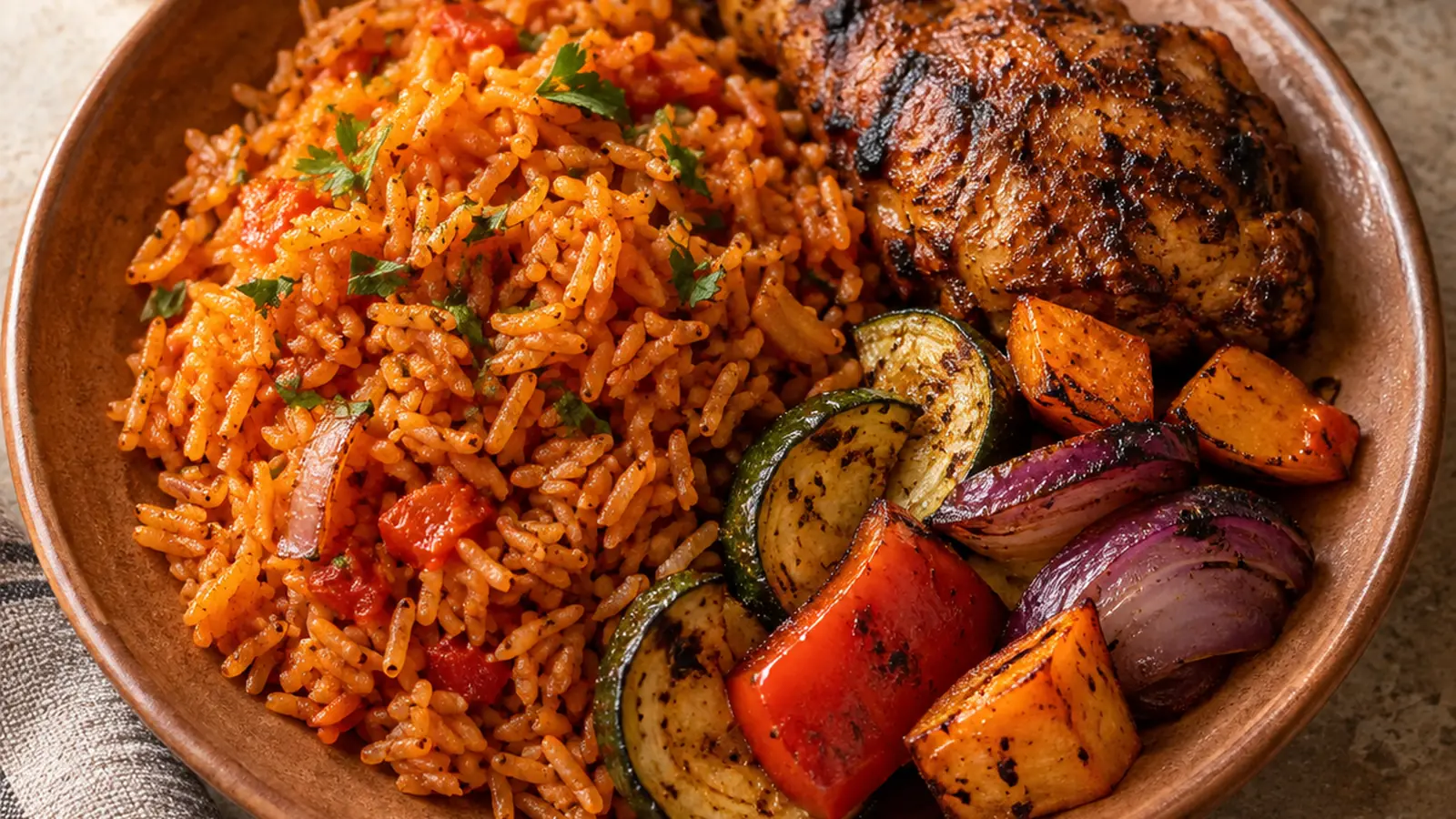
- Jollof rice (Senegambia origin, cooked across Nigeria and Ghana): rice simmered in a tomato and pepper base, about 60 minutes, mostly unattended.
Do these need ingredients I cannot find nearby?
Some do call for one or two things that are not in every kitchen, like doubanjiang for mapo tofu or berbere for misir wat, but most groceries with a reasonable international aisle carry them, and they keep for months once opened. The rest of each ingredient list is standard: onion, garlic, tomatoes, rice, chicken thighs.
What about dishes that take longer, for when I have more time?
Not every real regional dish is a 25-minute affair, and that is fine for a weekend. Moussaka, the Greek eggplant and lamb bake finished with bechamel, takes about two hours. Doro wat, an Ethiopian chicken stew built on berbere and finished with eggs, takes about two hours as well, most of it unattended simmering. Pho bo, the Vietnamese beef noodle soup, is a four-hour project traditionally, though a shortcut broth gets you close on a weeknight. Save these for a Sunday, and lean on the faster dishes above for a Tuesday.
How do I know if a dish fits what is actually in my kitchen right now?
This is the part that usually breaks down: finding a recipe you like, then discovering you are missing three ingredients for it. Shelfcook works from the other direction. Log what is in your kitchen, and it matches that against dishes from 30 cuisines, not just the five or six that show up on every recipe site, and shows you what is missing before you start cooking, not halfway through.
Is this really different from just searching "easy dinner recipes"?
A general search returns whatever is popular that week, which tends to cluster around the same handful of cuisines. Shelfcook's dish list is built from a curated set of reference dishes across all 30 cuisines specifically, so a Tuesday dinner can just as easily be Ethiopian or Sichuan as it is Italian, based on what is actually in your kitchen rather than what is trending that week.
What if the household does not agree on a cuisine?
That is normal, and it is one of the reasons household profiles exist. A dish gets checked against everyone's allergens and diets before it is suggested, and portions scale to the number of adults and children in the household, so "what's for dinner" does not have to turn into a separate negotiation every night on top of deciding what to cook.
Where do these dish suggestions actually come from?
Each dish in Shelfcook's library is grounded in a real, named regional dish, not an invented fusion mashup, with a defined set of core ingredients, a typical cook time, and diet and allergen tags attached to it. That reference set spans all 30 cuisines Shelfcook supports, from Mexican and Peruvian to Persian, Cantonese, and Indonesian and Malaysian, so pantry matching has real culinary grounding behind it rather than guessing at what "chicken and rice" should become.
Shelfcook is not in the app stores yet, it is still being built. Join the waitlist to try cooking from 30 cuisines instead of the usual six.
Nutrition figures are estimates. Allergen flags are best effort and say so. Shelfcook makes no health claims.